
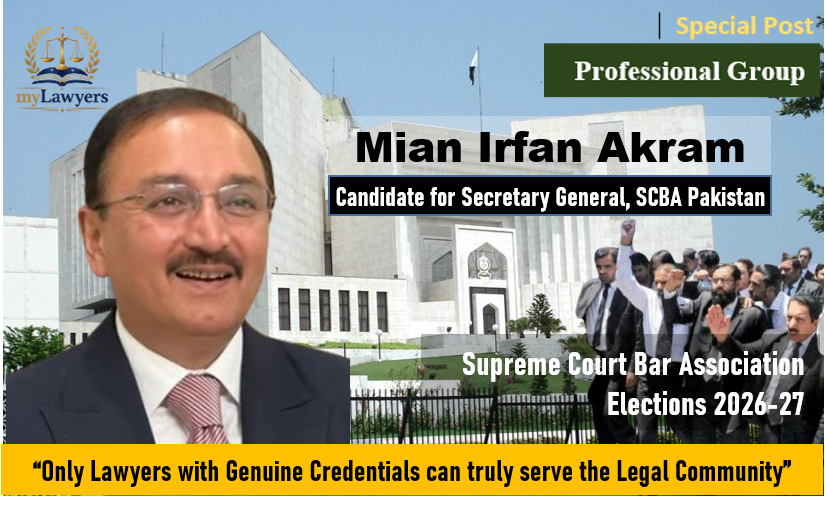
Renowned and highly respected, Mian Irfan Akram needs little introduction within Pakistan’s legal fraternity. With extensive experience in legal practice, government-related litigation, and corporate mergers and acquisitions, he represents a professional approach grounded in legal expertise, qualifications and ethical standards. His campaign for the Supreme Court Bar Association of Pakistan (SCBAP) Elections 2026–27 reflects his commitment to professional integrity, encapsulated in his statement: “Only the lawyers with genuine credentials can truly serve the legal community.”
Mian Irfan Akram, with Strong Credentials:
Hailing from Lahore, Mian Irfan Akram is contesting for the post of General Secretary in the SCBAP Elections 2026–27 on the platform of the Professional Group of lawyers. This is his second consecutive attempt at the same position, following a narrow defeat in the previous election. Nevertheless, he remains optimistic about his prospects, believing that candidates contesting for a second consecutive term often enjoy an advantage in bar elections— “repeater has an edge”– a trend he says has continued in Pakistan’s bar politics for approximately 15 years.
Mian Irfan Akram has also held the office of Attorney General of Pakistan form 2014 to 1018. He heads Buraq Legal Inc., a law firm based in Lahore, and brings extensive experience in legal practice, having appeared in numerous cases alongside fellow members of the legal fraternity.
Interview of Mian Irfan Akram:
In an exclusive telephonic conversation with mylawyers.pk, Mian Irfan Akram discusses his professional journey, election manifesto, proposed reforms and vision for the future of the Pakistan Supreme Court Bar Association.
1. Have you previously served as an office-bearer of any bar association, and what were your major achievements?
Mian Irfan Akram: Yes. In 2001, I was elected Finance Secretary of the Lahore High Court Bar Association. During my tenure, I worked to facilitate access to medical and diagnostic services for lawyers in Lahore. I also arranged for NADRA and passport-related facilities to be made available to lawyers within the court premises.
These initiatives were widely appreciated by members of the legal community because they helped lawyers access essential services conveniently and saved them considerable time and effort. I believe bar associations should not merely represent lawyers; they should also take practical steps to address their everyday needs.
2. Why have you chosen the Professional Group as your platform for contesting the SCBAP elections?
Mian Irfan Akram: The most significant aspect of the Professional Group is that its leadership and members are committed to professional integrity and have a deep understanding of the challenges faced by lawyers. The Group has consistently advocated constitutional supremacy, the rule of law and the independence of the judiciary.
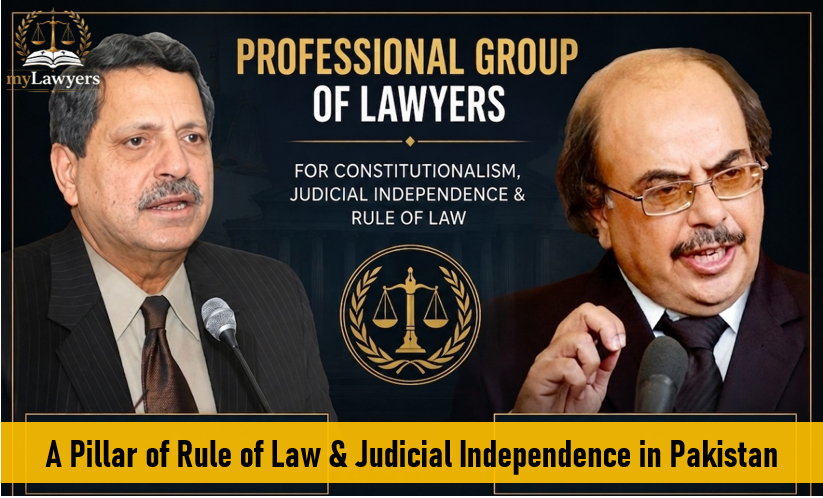
It represents a community of principled professionals who understand that the credibility of the legal system depends on the integrity and qualifications of those practising law. For me, genuine credentials, professional competence and an uncompromising commitment to constitutional principles are essential qualities for anyone seeking to represent the legal fraternity. I believe the Professional Group provides the right platform to advance these ideals and work towards a more independent, responsible and welfare-oriented bar.
3. This is your second consecutive attempt to become General Secretary of the SCBAP. How do you assess your chances in the upcoming election?
Mian Irfan Akram: I lost the previous election by a very narrow margin, so I had made up my mind at that time to contest again. I believe that consistency, perseverance and continued engagement with the legal community are important in bar elections.
This year, I am optimistic that my team and I have a good chance of succeeding. In my view, a candidate contesting for the same position for a second consecutive year often has an advantage because voters are already familiar with the candidate, his priorities and his proposed programme.
I believe this pattern has been evident in Pakistan’s bar politics for approximately the last 15 years. However, success ultimately depends on the confidence and support of the legal fraternity.
4. What are the principal welfare initiatives in your manifesto, particularly concerning housing and healthcare for lawyers?
Mian Irfan Akram: My campaign is driven by a desire to address several longstanding issues affecting the legal fraternity. My foremost priority is to ensure that lawyers receive possession of plots allocated through the Supreme Court Bar Association Housing Society. The scheme has faced unnecessary delays, and I intend to make every possible effort to resolve the outstanding issues and help lawyers secure land of their own.
Medical insurance for lawyers is another major priority. By the time a lawyer qualifies as an Advocate of the Supreme Court and reaches the senior stages of professional practice, age-related health challenges may become increasingly significant. At that stage, access to quality healthcare and financial protection becomes particularly important.
I want to work towards a comprehensive medical insurance arrangement that enables lawyers to receive treatment at leading public and private hospitals across Pakistan. So they do not have to travel to Islamabad simply to access appropriate medical facilities when suitable treatment is available elsewhere. My objective is to establish a practical welfare framework that protects lawyers’ health, financial security and dignity throughout their professional lives.
5. You have also proposed financial assistance for senior lawyers. How would this initiative work?
Mian Irfan Akram: Senior lawyers have devoted a substantial part of their lives to the legal profession, and their contributions deserve recognition and support. Unfortunately, not every lawyer enjoys financial security in old age. Some senior members of the profession become unable to continue practising because of health problems or other age-related difficulties.

I propose introducing a monthly stipend ranging from Rs. 50,000 to Rs. 100,000 for deserving Supreme Court lawyers aged 65 and above, particularly those facing financial hardship.
The scheme should operate under transparent eligibility criteria that take into account the applicants’ financial circumstances and genuine needs. Its purpose would be to provide meaningful assistance to senior lawyers who cannot adequately meet their living expenses. I believe the legal fraternity has a collective responsibility to ensure that those who have served the profession for decades are not left without support during their later years.
6. What reforms would you introduce to improve access to justice through video-link proceedings?
Mian Irfan Akram: I want to work towards making video-link proceedings more widely available in the Supreme Court and the Federal Constitutional Court. Such facilities can save considerable time and money for lawyers, litigants and the judiciary.
Lawyers and litigants often have to travel long distances to attend hearings, sometimes incurring substantial expenses even when a matter could be heard effectively through a secure video-link facility. Expanding remote hearing arrangements, wherever legally and procedurally appropriate, could help reduce these burdens.
I would also advocate establishing video-link facilities in all High Court registries. This would make it easier for litigants and lawyers from distant cities to participate in proceedings without unnecessary travel. These reforms would require coordination with the relevant judicial authorities and appropriate technological infrastructure. Nevertheless, I believe that technology can play a significant role in making the justice system more accessible, efficient and cost-effective.
7. How do you view the increasing politicization of bar associations, and what message would you give to lawyers ahead of the SCBAP elections?
Mian Irfan Akram: In my view, political parties should have no role in controlling or improperly influencing bar associations. Bars must remain independent institutions dedicated to protecting lawyers’ interests, upholding the rule of law and defending the Constitution.
The elected leadership of a bar association should not be influenced by political parties or pressure groups. Instead of acting as spokespersons for external political interests, bar associations must concentrate on the genuine problems of the legal fraternity, the independence of the judiciary and the supremacy of the Constitution.
For me, professional integrity is inseparable from the credibility of the legal system. Lawyers who seek leadership positions must possess genuine qualifications, demonstrate professional competence and remain committed to ethical standards. My message to the legal community is clear: bar elections should be about service, merit, integrity and the welfare of lawyers—not political patronage. Only lawyers with genuine credentials and an unwavering commitment to professional ethics can truly serve the legal community.
By
Editorial, mylawyers.pk