
Pakistan’s legal profession occupies a unique position in the constitutional structure of the country. Lawyers are not merely professionals; they are officers of the court and an essential part of the administration of justice. Yet, more than three years after Parliament enacted the Lawyers Welfare and Protection Act, 2023, a disturbing gap remains between legislation and its practical enforcement. The Act came into force immediately after its enactment and extends across Pakistan, with the stated objective of providing welfare and protection to advocates. The problem is therefore not the absence of legislation. It is the failure to translate that legislation into an effective administrative and institutional mechanism.
Lawyers Welfare and Protection Act 2023:
The Lawyers Welfare and Protection Act 2023 was introduced to address two interconnected concerns: the physical and professional security of lawyers and their social welfare. It defines acts of violence broadly, including harassment, coercion, assault, threats, interference with professional duties, damage to documents or property and attempts to compel an advocate to withdraw from representing a client.
The Act also provides welfare measures, including healthcare-related benefits. Section 11 specifically envisages medical treatment for advocates and their families in government and semi-government hospitals. However, the existence of statutory rights means little if the institutions responsible for enforcing them do not establish the procedures, funding mechanisms, notifications and administrative structures required to make those rights accessible.

An Unimplemented Law, despite Courts’ Judgements:
The Lahore High Court‘s January 2025 judgment in Adnan Mughal v. Primary and Secondary Healthcare Department is particularly significant. The court recognised the welfare obligations towards advocates and directed the Punjab authorities to ensure strict compliance with the existing notification providing free medical treatment to eligible practicing lawyers and their dependents. The judgment linked these obligations with Section 11 of the 2023 Act and constitutional protections concerning life, dignity, equality and basic necessities. Yet the continuing debate demonstrates that judicial recognition alone has not solved the larger implementation problem.
Then in April 2026, the Islamabad High Court was approached specifically over the alleged non-implementation of the Act. The petitioner argued that the legislation had effectively remained a “paper process”, with operational guidelines, eligibility criteria and disbursement mechanisms reportedly still absent. The court issued notices to the federal government and relevant authorities and sought reports and para-wise comments.
Similarly, reporting in May 2026 indicated that a Lahore High Court proceeding concerning implementation involved a large number of federal and provincial institutions, including law-enforcement agencies, regulators and bar councils. The allegation was that important provisions of the Act remained dormant.
Key Obstacles to Implementation:
The circumstances point towards an institutional coordination problem. The Act touches multiple areas simultaneously: policing, prosecution, healthcare, financial assistance, professional regulation and bar administration. Without a clearly designated implementation framework, responsibility can become fragmented among ministries, provincial departments, police authorities and bar councils.
Although passed to safeguard advocates against violence, threats, and professional harassment, several structural and administrative bottlenecks hinder its effective execution.
- Delay in Establishing Special Courts: The Act mandates designated courts (headed by Additional Sessions Judges) to conduct expedited trials within six months. In practice, many districts lack dedicated, operational courts specifically assigned to prioritize these cases alongside their heavy general dockets.
- Lack of Specialized Police Investigation Protocols: The law specifies that cases must be investigated by a officer ranked Inspector or above within 14 days. Due to procedural delays, lack of specialized training, and administrative backlog within law enforcement agencies, investigations frequently stall past the deadline.
- Funding & Bureaucratic Lags for Welfare Provisions: Key welfare measures—such as health coverage for families, institutional financial aid, and the Shuhada Package (compensation in case of death on duty)—require coordinated fund allocation between federal/provincial governments and Bar Councils, leading to administrative hurdles.
- Gaps in Institutional Awareness: Lower-level police personnel and court clerks often lack adequate orientation on the Act’s non-bailable nature and specialized procedural timelines, resulting in ordinary FIRs being filed under standard PPC (Pakistan Penal Code) sections instead of invoking the Protection Act.
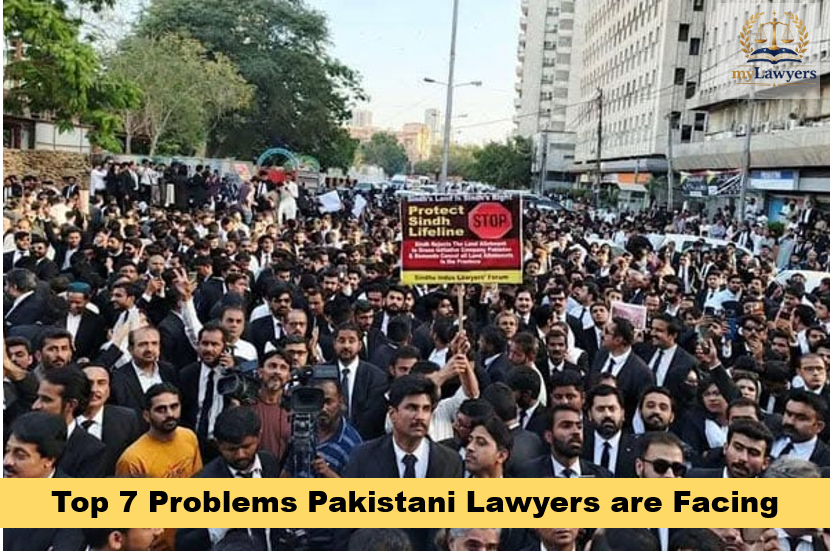
That reveals a law is not implemented merely because it has been passed by Parliament or cited in a judicial order. Implementation requires administrative ownership, budgetary commitment, institutional coordination and accountability.
The Larger Question of Rule of Law:
The non-implementation of a law specifically designed to protect members of the legal profession carries significance beyond lawyers themselves. If advocates can be threatened, harassed or deprived of statutory protections despite legislation enacted for their security, it raises a broader question about the effectiveness of Pakistan’s rule-of-law institutions. A criticism often raises about vandalism by lawyers. They have repeatedly been accused of several attacks on the police, on one of the hospitals in Lahore, and even on judges, are only some examples of the violent acts by the lawyers. But that doesn’t mean to deprive the entire legal fraternity from their rights and privilege.
The government, bar councils and relevant provincial and federal institutions therefore need to move from litigation to execution. Clear rules, designated authorities, funding mechanisms, training programmes, complaint procedures and measurable timelines should be established.
The Lawyers Welfare and Protection Act, 2023 should not become another example of Pakistan’s legislative ambitions exceeding its administrative capacity. For a country committed to constitutionalism and access to justice, protecting those who represent citizens before the courts is not a favour to the legal fraternity—it is an institutional obligation.
By
Editorial, mylawyers.pk
Frequently Asks Questions (FAQs)
- What is the Lawyers Welfare and Protection Act, 2023?
The Lawyers Welfare and Protection Act, 2023 is federal legislation designed to provide protection, welfare and professional security to advocates across Pakistan. It addresses acts such as threats, harassment, assault, coercion, interference with professional duties and damage to lawyers’ property or documents. The Act also provides welfare measures, including healthcare-related benefits for advocates and their dependents.
- Why is the Lawyers Welfare and Protection Act, 2023 considered poorly implemented?
Although the Act came into force after its enactment, several of its provisions have reportedly not been translated into effective administrative mechanisms. Problems include the absence or limited operation of designated courts, delays in investigations, inadequate institutional coordination, lack of clear procedures and delays in allocating funds for welfare measures. Consequently, there remains a significant gap between the statutory protections provided by the Act and their practical availability to lawyers.
- Have Pakistani courts taken notice of the non-implementation of the Act?
Yes. Courts have addressed aspects of the Act’s implementation. In January 2025, the Lahore High Court, in Adnan Mughal v. Primary and Secondary Healthcare Department, recognised welfare obligations concerning advocates and directed compliance with provisions relating to free medical treatment for eligible lawyers and their dependents. In April 2026, the Islamabad High Court was also approached over alleged non-implementation of the Act and sought responses from the federal government and relevant authorities. These proceedings demonstrate growing judicial concern over the gap between legislation and implementation.
- What are the major obstacles to implementing the Act?
The principal obstacles are institutional coordination, administrative delays, inadequate funding and lack of awareness. The Act involves several institutions, including police, courts, provincial and federal departments and bar councils. Delays in establishing designated courts, specialised police investigations, welfare funding and clear implementation procedures can prevent the law from operating effectively. Training gaps among police personnel and court staff may also result in cases being handled under ordinary legal provisions rather than the specialised protections provided by the Act.
- Why does implementation of the Act matter beyond the legal fraternity?
Effective implementation is important not only for lawyers but also for the rule of law and administration of justice in Pakistan. Lawyers represent citizens before courts and play an essential role in protecting constitutional and legal rights. Protecting advocates from violence, threats and professional interference does not mean excusing misconduct by lawyers themselves. Allegations of violence or misconduct by members of the legal profession must be dealt with through the law. However, such incidents cannot justify denying statutory protections to the wider legal fraternity. Implementing the Act would demonstrate that laws passed by Parliament are supported by effective institutions, accountability and administrative action.