
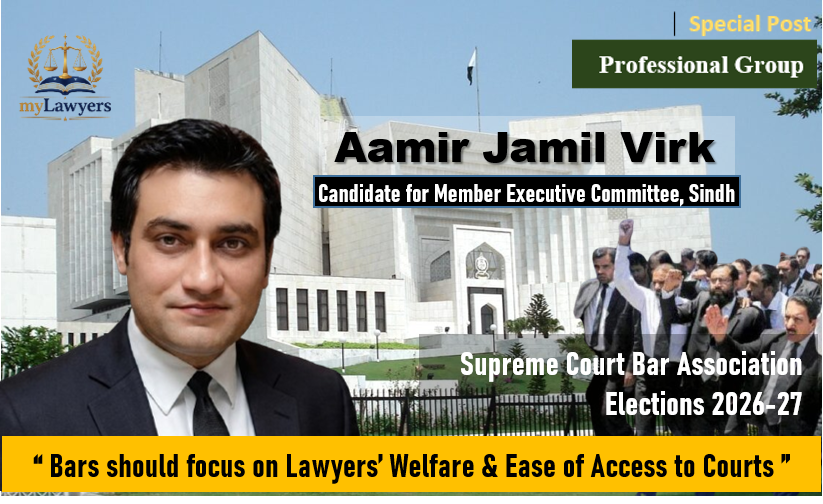
Aamir Jamil Virk is an Advocate of the Supreme Court of Pakistan renowned for his expertise in complex legal matters. With more than 20 years of experience in the legal profession, including eight years as an Advocate of the Supreme Court, he has established himself as a prominent practitioner of civil and criminal law. Through his firm, Jamil Ahmed Virk & Co, his practice encompasses constitutional law, white-collar crime and corporate litigation. He has argued numerous important cases before the Supreme Court and contributed to the development of legal precedents. His analytical approach and persuasive advocacy have earned him recognition as a renowned litigator.
Aamir Jamil Virk, An Amplifying Legal Voice:
Aamir Jamil Virk’s philosophy of life is centred on providing legal assistance and making access to justice easier for ordinary citizens. His commitment to public service and the legal fraternity has continued despite facing electoral defeat in the past. In 2021, he contested the Sindh High Court Bar Association election but was unsuccessful. Instead of discouraging him, the experience strengthened his determination to serve the public and the legal community. Considered among one of the youngest lawyers practicing before the Supreme Court, he is now contesting the Supreme Court Bar Association Elections 2026 for the position of Member, Executive Committee, Sindh Chapter, on the platform of the Professional Group of Pakistan’s lawyers.
Committed to the rule of law and the effective administration of justice, Virk believes that bar politics should ultimately serve lawyers, litigants and the wider public. During a recent phone conversation with mylawyers.pk, he discussed his manifesto, priorities and vision for the legal profession.
Interview of Aamir Jamil Virk:
The excerpts of the conversation are published for mylawyers.pk’ readers as interview:
Question 1: You are among the youngest lawyers practicing before the Supreme Court and perhaps the youngest who is contesting the Supreme Court Bar Association elections. What is your manifesto for the Sindh Chapter?
Aamir Jamil Virk: Lawyers practicing before the Supreme Court face a wide range of professional and welfare-related problems. Medical facilities and other welfare measures are certainly important and should remain priorities for every elected office-bearer. However, my primary focus is on the practical problems lawyers and litigants face in courts.
One of my foremost objectives is to ensure timely and regular Supreme Court rosters in Karachi. Lawyers and litigants should not be compelled to travel to Islamabad merely to file cases or attend proceedings when the matter can appropriately be dealt with in Karachi. At the same time, we cannot continue relying on poorly functioning or interrupted video-link proceedings. Access to justice requires a functioning judicial infrastructure close to the litigant and the legal community.
My second major concern is the management of cause lists. At present, correspondence and communication regarding the cause lists is inadequate. I want to ensure that the scheduled cause lists are regularly and reliably communicated to lawyers in their chambers. There should also be proper coordination between the court’s internal records, judges’ daily planners and the itineraries or cause lists made available to advocates and litigants. These systems should correspond with one another so that lawyers can properly prepare and litigants are not unnecessarily inconvenienced.
Question 2: You have also identified enrollment to the superior courts as an important issue. What reforms do you propose?
Aamir Jamil Virk: Enrollment of lawyers to the superior courts is a serious professional issue. In my view, the process has become unnecessarily difficult and, in some cases, appears to be exploited or manipulated. A lawyer who has fulfilled the prescribed professional requirements should have a clear, transparent and accessible route to enrollment. The process should be based on merit and uniform criteria rather than personal connections or influence. If elected, facilitating a fair and transparent enrollment process will be one of my principal priorities. The purpose of regulation should be to maintain professional standards, not to create unnecessary barriers for deserving lawyers.
Question 3: You are contesting the election from the platform of the Professional Group. Why do you believe this platform can help you achieve your objectives?
Aamir Jamil Virk: I believe the Professional Group represents lawyers who are genuinely committed to the legal profession. Its members understand the practical problems that advocates encounter in courts because they themselves remain connected with professional practice. The legal fraternity needs representatives who understand what lawyers face on a daily basis rather than people who are merely advocates by designation but are primarily engaged in other businesses or activities.
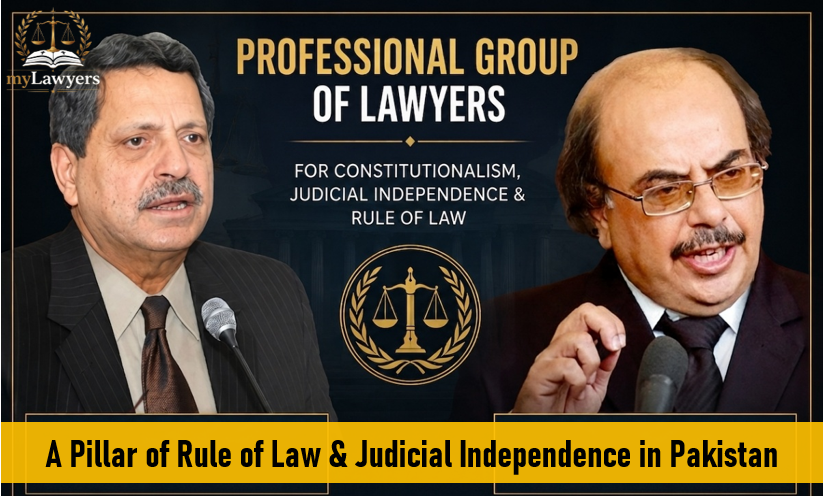
The Professional Group has experienced and respected leaders such as Abid Zuberi, Javed Ahmed Chittari and Hamid Ali Khan. They have consistently spoken about constitutionalism, independence of the judiciary and the welfare and dignity of lawyers. I believe that being part of such a platform provides me with an opportunity to translate my professional vision into practical initiatives. My objective is not simply to hold an office; it is to use the office to address genuine problems faced by lawyers and litigants.
Question 4: Some senior lawyers believe that excessive politicization of bar associations is damaging the dignity and effectiveness of the legal profession. What is your view?
Aamir Jamil Virk: I believe bar politics should ultimately be connected with the fundamental rights of citizens and the administration of justice. The bar is not an isolated institution. Lawyers are officers of the court and play an important role in protecting constitutional and legal rights. Therefore, bar politics should focus on issues that directly affect justice, the rule of law and the rights of ordinary people.
Political differences are natural within any democratic institution, but they should not overshadow the professional responsibilities of lawyers. The dignity of the bar depends upon maintaining independence, professionalism and respect for constitutional principles. For me, bar politics should be a means of service rather than an avenue for personal or political advancement.
Question 5: You have emphasized public grievances and access to justice. What role should bar associations play in this area?
Aamir Jamil Virk: Bar associations can play a much greater role in resolving public grievances and assisting citizens with legal problems. Many people cannot afford prolonged litigation or do not know how to navigate the legal system. At the same time, lawyers themselves sometimes face unnecessary procedural and administrative difficulties. I believe bar associations should establish facilitation and public grievance cells where citizens can receive initial legal guidance and assistance.
The Supreme Court already has the example of its Human Rights Cell, which demonstrates how institutional mechanisms can help address genuine grievances. Similar facilitation mechanisms can be developed by bar associations to assist people who cannot afford extensive legal proceedings. Such initiatives would allow genuine grievances and legal complaints to be identified and processed more efficiently, while also helping litigants understand the appropriate legal avenues available to them.
Question 6: What specific improvements do you want to see in the day-to-day functioning of the courts for lawyers and litigants?
Aamir Jamil Virk: The first requirement is certainty and effective communication. A lawyer should know when and where his or her matter is scheduled and should be able to rely on the information provided by the court. Cause lists, rosters, judges’ schedules and information available to advocates must be properly synchronized. Similarly, technology should facilitate access to justice rather than become another obstacle. If video links are used, they must function effectively. If a case can be heard in Karachi, lawyers and litigants should not unnecessarily be required to travel to Islamabad.
Small administrative failures can have significant consequences for litigants. A lawyer may spend considerable time and resources preparing for a hearing, only to face uncertainty because of inadequate communication or discrepancies in scheduling. Improving these basic systems can make a substantial difference to the efficiency and dignity of court proceedings.
Question 7: Finally, what is your broader vision for the legal fraternity if elected Member of the Executive Committee from Sindh?
Aamir Jamil Virk: My vision is straightforward: a stronger bar, an independent judiciary, better court administration and easier access to justice. The legal profession should not be viewed merely through the lens of elections and office-holding. Every elected representative has a responsibility towards fellow lawyers as well as the public.
I want to see a bar that actively addresses the professional problems of its members while also contributing to the resolution of public grievances. Lawyers deserve better welfare facilities, but they also deserve a court system where procedures are predictable, cause lists are properly communicated, rosters are managed efficiently and technology actually works for them.
I entered this election because I believe that younger lawyers should also contribute their ideas and energy to the institutions of the profession. My objective is to amplify the legal voice of Sindh and work for practical reforms that benefit lawyers and litigants alike.
By
Editorial, mylawyers.pk