
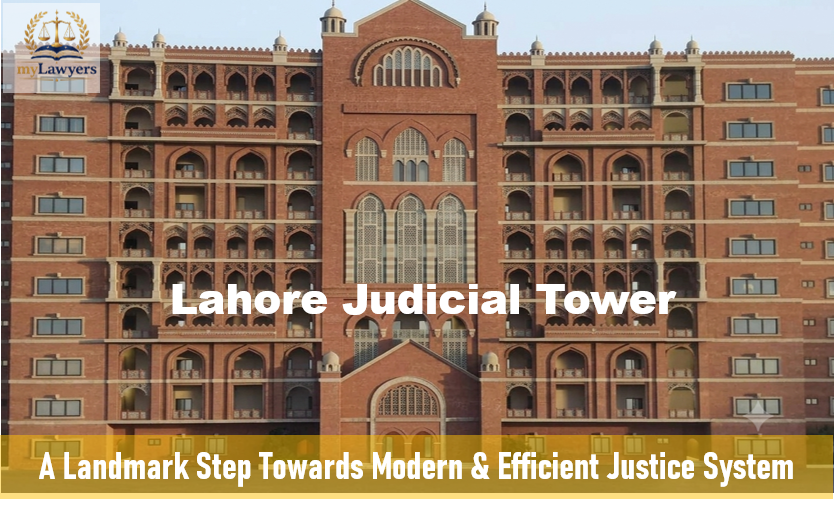
The foundation stone of the Lahore Judicial Tower marks the beginning of one of the most ambitious infrastructure projects in Pakistan’s judicial history. Spearheaded by Lahore High Court Chief Justice Aalia Neelum, the project is expected to transform the administration of justice by bringing all subordinate courts in Lahore under one roof. With an estimated cost of Rs24 billion and a completion timeline of 30 months, the Judicial Tower represents a significant investment in improving judicial efficiency, accessibility, and public service.
Lahore Judicial Tower for A Centralized Legal System:
For decades, litigants, lawyers, and court staff in Lahore have faced challenges due to the scattered locations of subordinate courts. Multiple court premises often resulted in delays, increased travel time, duplication of administrative functions, and unnecessary inconvenience for all stakeholders. The Lahore Judicial Tower addresses these longstanding issues by creating a single, integrated judicial complex. The project will house 184 modern courtrooms, dedicated bar rooms for lawyers, secure record rooms, and a state-of-the-art parking plaza. By centralising judicial operations, the tower is expected to streamline court proceedings, improve coordination among judicial officers, and make legal services more accessible to the public.
A Visionary Initiative:
The project reflects the forward-looking vision of Chief Justice Aalia Neelum, who has consistently emphasized judicial reforms, technological advancement, and improved court infrastructure. Her leadership in launching this landmark initiative is expected to leave a lasting legacy for Pakistan’s justice system.
Speaking at the foundation ceremony, Federal Minister for Law and Justice Senator Azam Nazeer Tarar described the Judicial Tower as a historic milestone. He assured the judiciary of the federal government’s complete support in ensuring the successful completion of the project and acknowledged the valuable contributions of Pakistan Bar Council member Ahsan Bhoon and Advocate Munir Bhatti in making the initiative a reality. The Punjab government’s support also played a crucial role in advancing the project, demonstrating the importance of cooperation between the judiciary and the executive in strengthening public institutions. Members of Lahore High Court Bar Association were also present at the occassaion.

Improving the Legal Ecosystem:
Beyond infrastructure, the Judicial Tower is expected to enhance the overall working environment for judges, lawyers, litigants, and court employees. Modern court facilities will improve case management, provide better security for court records, and create a more professional atmosphere for legal proceedings.
Pakistan Bar Council Member Ahsan Bhoon rightly described the Judicial Tower as a landmark achievement that will benefit future generations of legal professionals and the public alike. Consolidating subordinate courts within one complex is likely to reduce administrative costs, improve resource allocation, and facilitate faster communication among judicial departments.
Commitment to Judicial Modernization:
The day’s events also highlighted the judiciary’s commitment to embracing modern technology and sustainable practices. Following the foundation ceremony, Chief Justice Aalia Neelum inaugurated the solarisation of subordinate courts, an e-library, and the LEADS Bar Room at the Lahore Bar Association.
These initiatives reflect a broader vision of creating environmentally sustainable and technologically advanced judicial institutions. Solar energy can significantly reduce operational costs, while digital libraries will provide lawyers and judges with easier access to legal research, case law, and academic resources.
Looking Ahead
The Lahore Judicial Tower is far more than a new building—it symbolizes Pakistan’s commitment to modernising its justice system. Efficient infrastructure plays a vital role in ensuring timely justice, enhancing transparency, and strengthening public confidence in the rule of law.
Once completed, the Judicial Tower is expected to become one of Pakistan’s largest and most modern judicial complexes. By integrating courtrooms, administrative offices, legal facilities, and modern amenities within a single campus, it promises to improve judicial efficiency and provide a better experience for litigants and legal practitioners alike.
As Pakistan continues to pursue judicial reforms, projects like the Lahore Judicial Tower demonstrate that investment in infrastructure, technology, and institutional capacity can significantly strengthen the delivery of justice. The initiative stands as a model for future judicial development projects across the country and represents an important milestone in building a more accessible, efficient, and modern legal system.
By
Editorial, myLawyers.pk
Important Note: The image used in this article, is AI-generated
Frequently Asked Questions (FAQs)
1. What is the Lahore Judicial Tower?
The Lahore Judicial Tower is a modern judicial complex being constructed in Lahore to bring all subordinate courts under one roof. The project aims to improve judicial efficiency, provide better facilities for judges, lawyers, litigants, and court staff, and create a more organized and accessible justice system.
2. What facilities will the Lahore Judicial Tower include?
The Judicial Tower will feature 184 courtrooms, dedicated bar rooms for lawyers, secure record rooms, administrative offices, and a modern parking plaza. It is designed to provide a centralized and technologically advanced environment that supports efficient court operations and enhances the experience of all court users.
3. How will the Judicial Tower benefit Pakistan’s justice system?
By centralizing subordinate courts, the Judicial Tower is expected to reduce administrative delays, improve coordination among judicial departments, enhance case management, and make legal services more accessible. The project also supports judicial modernization through digital facilities and sustainable initiatives such as solar-powered court infrastructure.
4. Why is the Lahore Judicial Tower considered a landmark project?
The Judicial Tower is regarded as a landmark project because it represents one of the largest investments in judicial infrastructure in Pakistan. It reflects the country’s commitment to strengthening the rule of law, improving access to justice, embracing technology, and building a modern judicial system capable of meeting future legal and administrative challenges.