
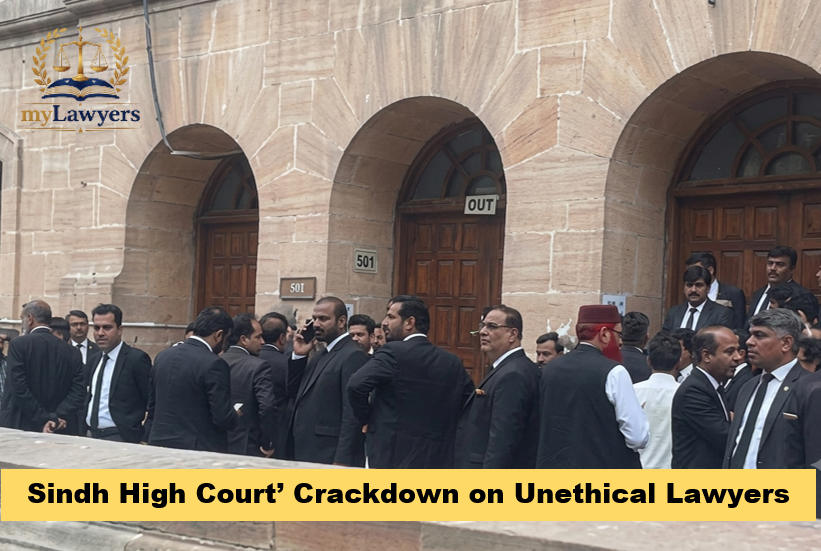
The recent order of the Sindh High Court (SHC) to constitute a Joint Investigation Team (JIT) for probing allegations of blackmail, illegal property dispossession, intimidation, and other unlawful activities by certain members of the legal fraternity marks a significant development for Pakistan’s justice system. The decision reflects the judiciary’s determination to protect the integrity of the legal profession while ensuring that no individual, regardless of status, remains above the law.
Sindh High Court’ Observation:
The observation made by single-bench judge of Sindh High Court Justice Omar Sial highlight a disturbing reality. Allegations that some advocates have been involved in illegal dispossession of property, misuse of criminal laws, intimidation of litigants, coercion of police officials, and even exploitation of sensitive laws for personal gain have seriously damaged the image of the legal community. Equally alarming are reports of litigants being assaulted within court premises and being denied the freedom to engage legal counsel of their choice.
The SHC passed these directives while hearing pre-arrest bail applications of two suspects Athar Maqsood and Ahsan Ahmed in a rioting and criminal intimidation case lodged on the complaint of advocate Ghulam Asghar Shar last year at the Shah Latif Town police station.
A Case of Writ of Law:
The Justice Omar Sial of Sindh High Court rightly emphasized that the Constitution guarantees equal protection of the law to every citizen. Courts, police officers, prosecutors, and public officials must be able to discharge their duties without fear, pressure, or harassment. When judicial officers are targeted through frivolous complaints merely for taking action against unethical practices, it undermines the rule of law and weakens public confidence in the justice system.
The bench also noted that the district and sessions courts in Sindh have shown considerable resistance against attacks of such lawyers, but it was an open secret that whenever courts passed orders to curtail activities of such black sheep in the legal profession, they met with frivolous, vexations and malicious complaints and references against such judges.

The proposed JIT, comprising senior police officials along with representatives from intelligence agencies and Pakistan Rangers Sindh, is expected to conduct a comprehensive and impartial investigation. If carried out transparently, the inquiry could expose organized networks involved in professional misconduct and recommend measures to prevent such practices in the future.
Upholding Lawyers’ Integrity:
However, accountability should not stop at criminal investigations. The Sindh Bar Council and bar associations must also play a proactive role by initiating disciplinary proceedings against advocates found guilty of violating professional ethics. Self-regulation within the legal profession is essential for maintaining public confidence and preserving the dignity of advocacy.
It is equally important to recognize that the overwhelming majority of lawyers in Pakistan serve their clients with honesty, competence, and dedication. The alleged misconduct of a few individuals should never overshadow the contributions of thousands of ethical legal practitioners who uphold justice every day.
The SHC’s intervention should therefore be viewed not as an attack on the legal fraternity, but as an opportunity for reform. By ensuring accountability, strengthening professional discipline, and reaffirming the supremacy of the law, Pakistan can restore public trust in its legal institutions and reinforce the principle that justice must remain impartial, fearless, and accessible to all.
Frequently Asked Questions (FAQs)
1. Why is integrity important in the legal profession?
Integrity is the foundation of the legal profession. Lawyers are entrusted with protecting the rights of individuals, representing clients honestly, and upholding the rule of law. Ethical conduct strengthens public confidence in the justice system and ensures that legal proceedings remain fair, transparent, and impartial.
2. What constitutes professional misconduct by a lawyer in Pakistan?
Professional misconduct may include fraud, blackmail, illegal property dispossession, misuse of legal procedures, breach of client confidentiality, conflicts of interest, or any conduct that violates the professional code of ethics. Lawyers found guilty of misconduct may face disciplinary action by the relevant Bar Council in addition to criminal proceedings where applicable.
3. How are unethical lawyers held accountable in Pakistan?
Lawyers accused of professional misconduct may be investigated by law enforcement agencies if criminal offences are involved. Separately, the relevant Bar Council can initiate disciplinary proceedings, which may result in warnings, suspension, or cancellation of a lawyer’s licence, depending on the nature and severity of the misconduct.
4. Does the misconduct of a few lawyers represent the entire legal profession in Pakistan?
No. The vast majority of lawyers in Pakistan perform their duties with professionalism, integrity, and dedication. Isolated cases of misconduct should not overshadow the contributions of thousands of ethical legal practitioners who work to uphold justice, protect constitutional rights, and serve the public.
5. What can clients do if they believe a lawyer has acted unethically?
If a client believes a lawyer has engaged in unethical or unlawful conduct, they should preserve all relevant documents and evidence, seek independent legal advice, and file a complaint with the appropriate Bar Council. If the conduct involves a criminal offence, the matter may also be reported to the relevant law enforcement authorities for investigation.